Vessel Construction vs. Conversion
Should You Convert an Existing Vessel or Build a New One?
When an existing vessel no longer does everything an operator needs it to do, there are usually two broad options.
Change the vessel you already have.
Or build another one.
At first glance, new vessel construction may seem like the obvious choice. A new vessel can be designed around today’s requirements from the keel up, without the limitations imposed by an existing hull, machinery arrangement, or decades-old structure.
But building new comes with limitations of its own.
Cost is a major one. So is time. New vessel construction can require a significant investment, and busy U.S. shipyards may have order books stretching years into the future. For an operator that needs more capacity or different capabilities sooner, waiting for a new vessel isn’t always practical.
That’s when it may be worth asking a different question:
Can the vessel we already own become the vessel we need?
Sometimes, the answer is yes.
Why Owners Consider Conversion Instead of Vessel Construction
In our experience, budget is usually the number-one reason owners explore converting an existing vessel.
But it isn’t the only one.
An operator may need additional passenger or cargo capacity. A vessel may need to perform a different job than it was originally designed for. Changes in an industry may leave one type of vessel in surplus while creating demand somewhere else.
Time can be equally important.
If new vessel construction means waiting several years for an available shipyard, modifying an existing asset may provide a much faster path to getting the capacity an operator needs into service.
That can be particularly valuable for seasonal operators. If a ferry company needs fewer vessels during the winter, for example, an existing vessel may be modified during the offseason and returned to service when demand increases.
The question isn’t simply which option costs less.
It’s which one makes the most sense for the operation.
What Can You Change on an Existing Vessel?
There are many levels of vessel modification.
A repower may be relatively straightforward. Engines can be replaced and associated propulsion components modified without fundamentally changing the vessel’s purpose.
Other projects go much further.
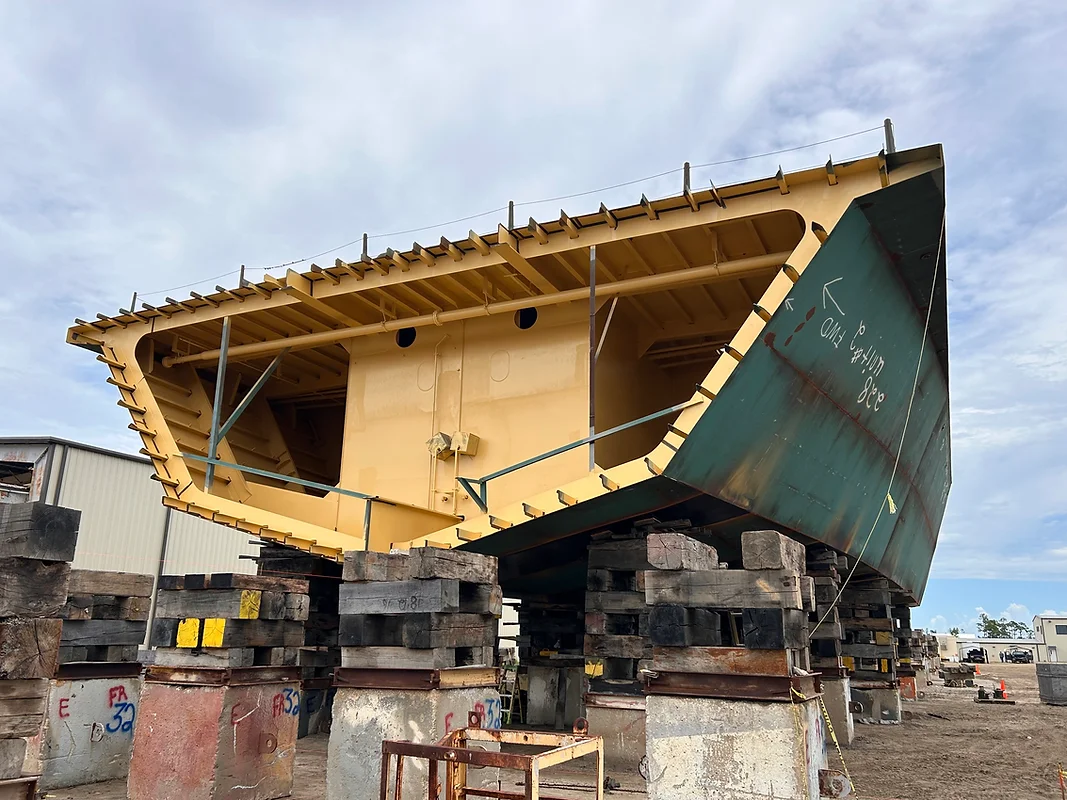
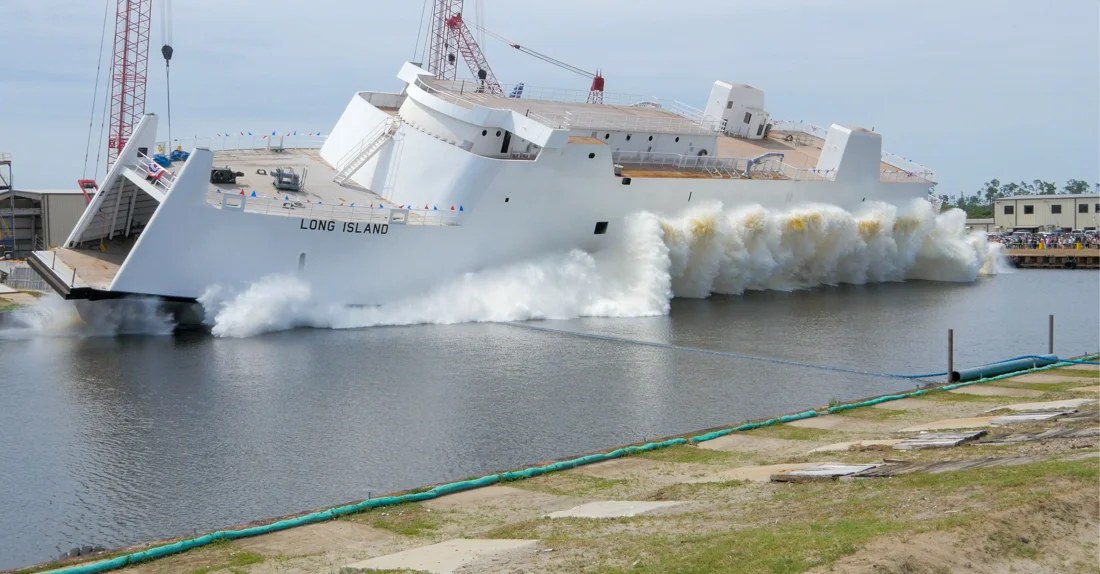
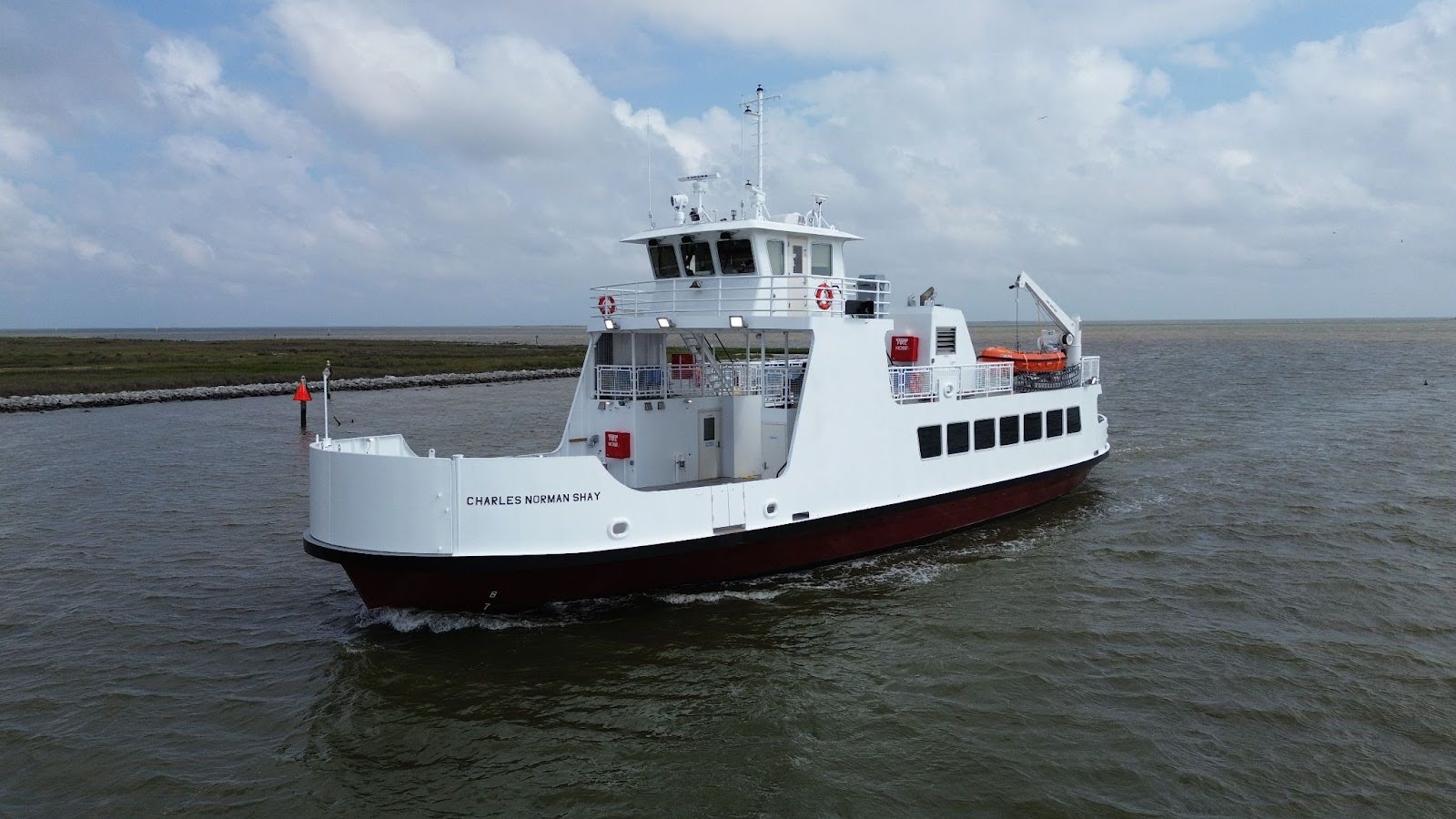
An owner may want to increase capacity, modify the superstructure, lengthen the vessel, or adapt it for an entirely different type of service. Gilbert Associates is currently involved with a project converting an unfinished offshore supply vessel (OSV) into a passenger and vehicle ferry.
These projects can range from relatively straightforward repowers to major structural modifications and complete changes in vessel service. Our vessel conversion and modification consulting services include repowering, vessel lengthening, structural modifications, stability assessments, propulsion evaluations, and major conversions and retrofits.
Generally, the deeper a modification goes into the existing vessel, the more complicated the engineering becomes.
Compare the hull to the foundation of a building. Modifying structures above the main deck may be relatively manageable because you’re building on the foundation that’s already there.
Change the hull itself, and you’re changing the foundation.
That can affect everything built on top of it.
Is Your Vessel Actually a Good Candidate for Conversion?
Before deciding between conversion and vessel construction, we first want to understand exactly what the owner needs.
Then comes feasibility.
Has a similar conversion been done before?
Is there an established regulatory precedent?
Have the regulators encountered a project like this?
Are there engineering or regulatory obstacles that could make the concept impractical?
Innovation has its place, but being the first to attempt an unusual conversion can introduce additional cost and uncertainty. Our engineers consider whether there’s a proven path before committing significant resources to detailed design.
The objective isn’t to prove that something can be done.
It’s to determine whether it’s worth doing.
Investigate Before You Convert
The vessel itself is the next piece of the equation.
Structure and stability are major considerations. Can the existing hull support the loads required by its new mission? How much weight will be added or removed? Where will that weight go? How will the finished vessel sit in the water?
Then there are the things you don’t know.
Existing vessels don’t always come with complete or accurate original drawings. When that information isn’t available, additional surveys may be required before engineers can confidently determine what’s actually aboard the vessel and how it was constructed.
That’s why we emphasize being thorough during the initial evaluation.
Finding a significant problem before engineering and construction are underway gives the owner options. Finding it after the project is 25% complete can mean additional engineering, additional cost, and an entirely new scope of work.
A successful conversion starts with understanding what you really have.
Vessel Conversion vs. New Vessel Construction: Comparing Cost
A conversion will generally cost less than building a comparable vessel from scratch.
But there’s a limit.
As the scope becomes more extensive, more of the economic advantage can disappear. Existing systems may have to be removed. Structure may need reinforcement. New machinery, piping, electrical equipment, and safety systems may need to be integrated into spaces that weren’t designed for them.
Weight is especially easy to underestimate.
One new steel pipe may not sound significant. Neither does another piece of equipment or another structural support.
But those additions accumulate.
Eventually, you’re talking about tons of additional weight, and where that weight is located can affect draft, trim, center of gravity, and stability.
There isn’t a universal percentage or dollar figure where conversion stops making sense and vessel construction becomes the better investment.
That’s precisely why the engineering evaluation matters.
Put-In-Bay: When Conversion Beat Building New
Sometimes that evaluation produces an answer the owner wasn’t expecting.
A Put-In-Bay ferry operator originally approached Gilbert Associates while considering a new vessel.
The real need was additional capacity.
Instead of moving directly into new vessel construction, we evaluated what could be accomplished with the ferry already in service. The solution was to lengthen the existing vessel.
The result did more than avoid a new build.
The lengthened ferry could carry 50% more cars and gained approximately two knots of speed.
That’s an important distinction.
A vessel conversion doesn’t necessarily mean settling for an older vessel that is simply “good enough.”
With the right candidate and the right engineering, modifying an existing vessel can significantly improve its capabilities.
Sometimes the Best Starting Point Is an Unfinished Vessel
There’s another interesting middle ground between converting an operating vessel and starting new vessel construction from scratch.
An unfinished hull can sometimes provide an excellent platform for conversion.
The less machinery, piping, wiring, and equipment already installed, the less engineers and shipyards have to remove or work around. There are fewer unknowns and more freedom to adapt the vessel to its new purpose.
We encountered that situation with the John H., an unfinished OSV being converted for ferry service.
In conversion work, sometimes the simpler the canvas, the more possibilities you have.
When Does New Vessel Construction Make More Sense?
Not every vessel should be converted.
An existing hull brings existing limitations with it. Its structure, dimensions, condition, stability characteristics, and arrangement all define what engineers have to work with.
The more those characteristics conflict with the owner’s new requirements, the harder the conversion becomes.
And every unknown introduces risk.
That’s why the decision shouldn’t begin with the assumption that conversion is cheaper, just as it shouldn’t begin with the assumption that building new is better.
It should begin with the vessel, the mission, and the numbers.
Start With the Vessel You Have and the Vessel You Need
The choice between modifying an existing vessel and pursuing new vessel construction isn’t simply a question of old versus new.
It’s an engineering and business decision.
How much life remains in the existing vessel?
What needs to change?
How quickly does the operator need additional capacity?
What will the conversion require structurally and mechanically?
What will regulators require?
And how much uncertainty is hiding in the vessel you already own?
Sometimes new vessel construction will provide the cleanest path forward.
Other times, the right engineering can reveal capabilities in an existing vessel that its owner didn’t know were there.
Before committing to either path, it pays to understand both.
Considering changes to an existing vessel or planning a new build? Contact Gilbert Associates to discuss your operational needs and determine which approach makes the most sense for your fleet.