How Hull Design Affects Vessel Performance
The Shape of the Hull Is Only the Beginning.
When people think about boat hull design, they usually picture the shape of the vessel.
Should the bow be sharper?
Should the hull be wider?
Should it sit deeper in the water?
Those are certainly part of the conversation.
But they’re rarely where the conversation starts.
At Gilbert Associates, hull design begins long before anyone starts refining curves or calculating resistance. It starts with understanding what the vessel is expected to accomplish. Every commercial vessel is designed to solve a different operational problem.
Some need to carry passengers quickly and comfortably. Others must maximize towing power, maintain stability in heavy seas, or operate efficiently in shallow water. Even vessels that appear similar on the surface can require very different hull designs because of their routes, operating environments, or regulatory requirements.
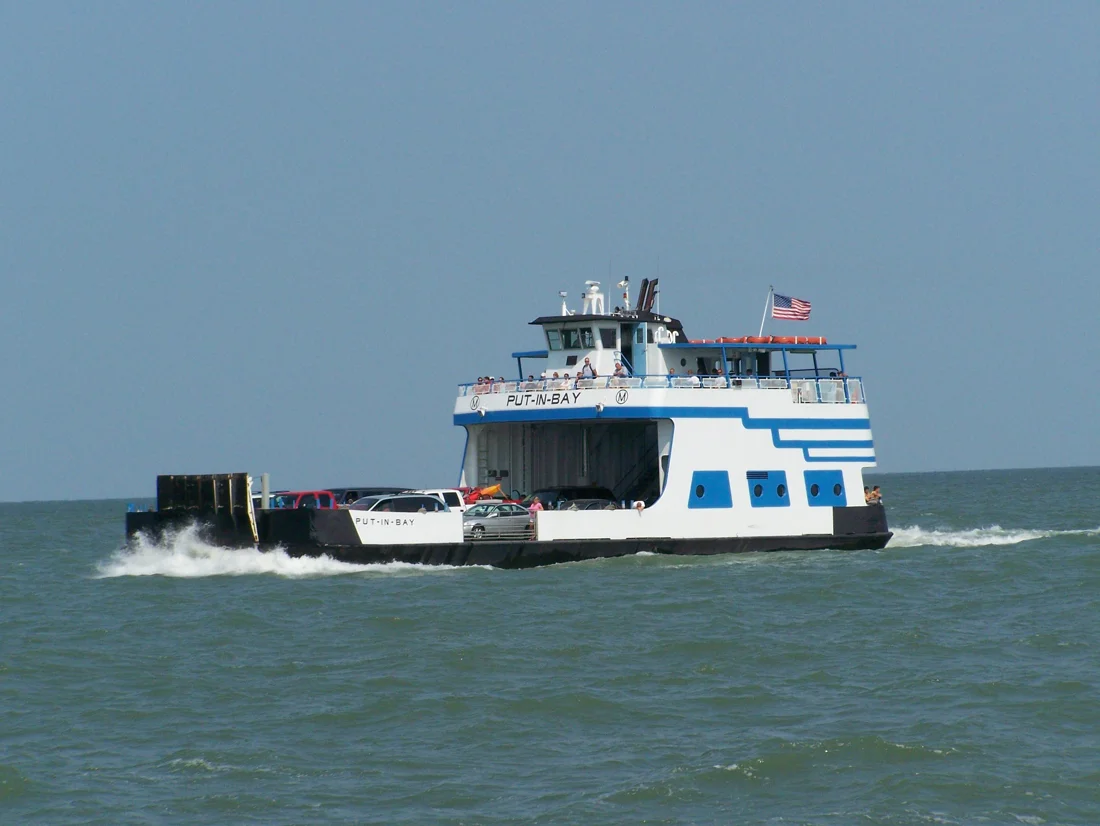
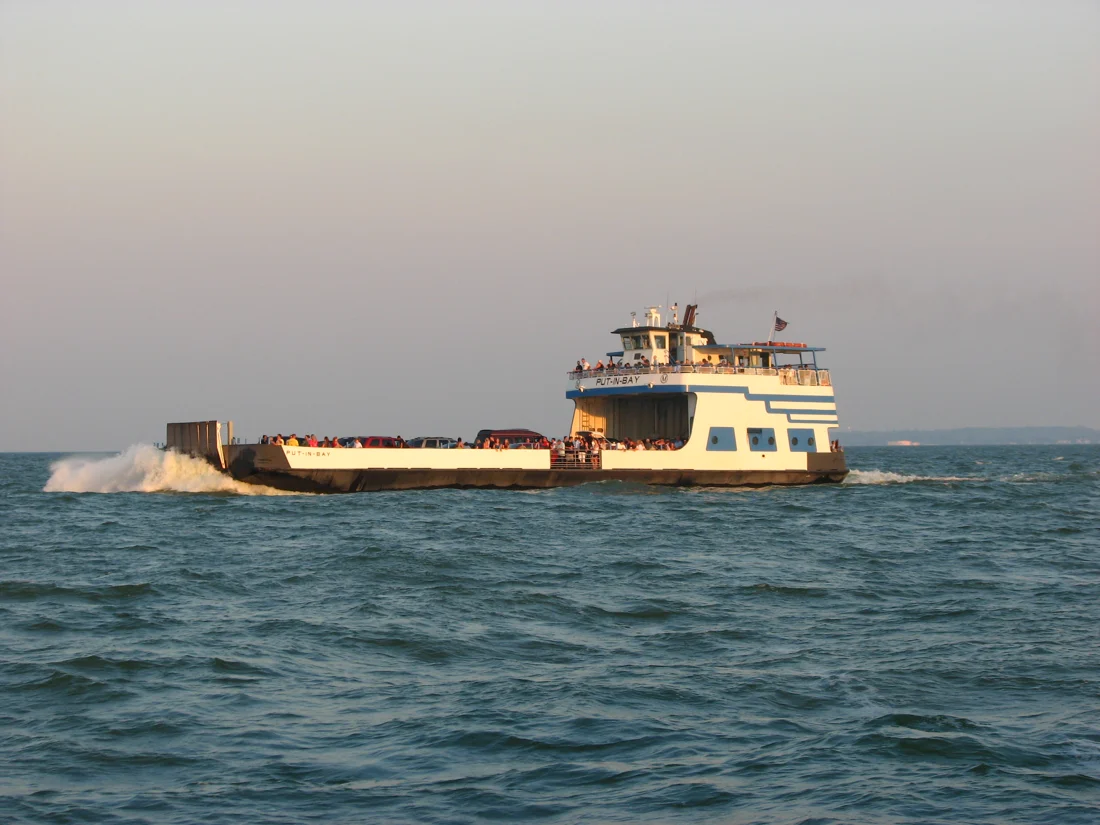
For example, Gilbert Associates once worked on a passenger vehicle ferry serving Put-In-Bay, Ohio. To accommodate peak ridership in summer months, the owner needed a vessel that could carry more vehicles. The ferry operator solicited Gilbert Associates to design a new, higher-capacity ferry. However, the Naval Architecture team at Gilbert quickly determined that vessel replacement wasn’t the only solution.
Instead, the Gilbert Team advised the owner that lengthening one of their existing vessels, the M/V Put-In-Bay, could achieve the operational goals at a significantly lower cost than a newbuild. The owner agreed, and Gilbert engineered a 40ft hull extension and a repowering. By the following summer, the Put-In-Bay could carry 55% more vehicles and steam 2kts faster than before.
That project wasn’t really about making the hull longer.
It was about solving an operational problem.
That’s where good hull design begins.
Performance Isn’t One Measurement. It’s Dozens of Them.
When people talk about vessel performance, speed usually gets most of the attention.
It’s important.
It just isn’t the whole story.
Hull design influences nearly every aspect of how a vessel performs throughout its life, including:
- Stability
- Seakeeping in waves
- Fuel efficiency
- Horsepower requirements
- Cargo and passenger capacity
- Maneuverability
- Ride quality
- Maintenance
- Long-term operating costs
The challenge is that these characteristics don’t exist independently.
Improving one often affects another.
A hull that carries more cargo may require more power. A shallower draft may improve access to certain waterways while reducing hydrodynamic efficiency. Design features that improve comfort offshore may offer little benefit in protected inland waters.
The goal isn’t to maximize one characteristic.
It’s to find the right balance for the vessel’s intended service.
The Fastest Solution Isn’t Always the Most Complicated.
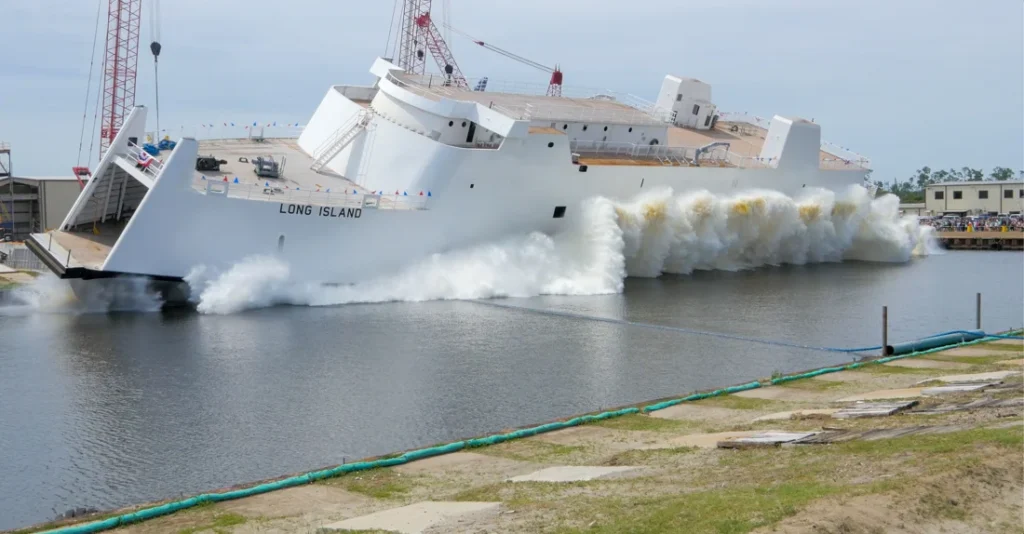
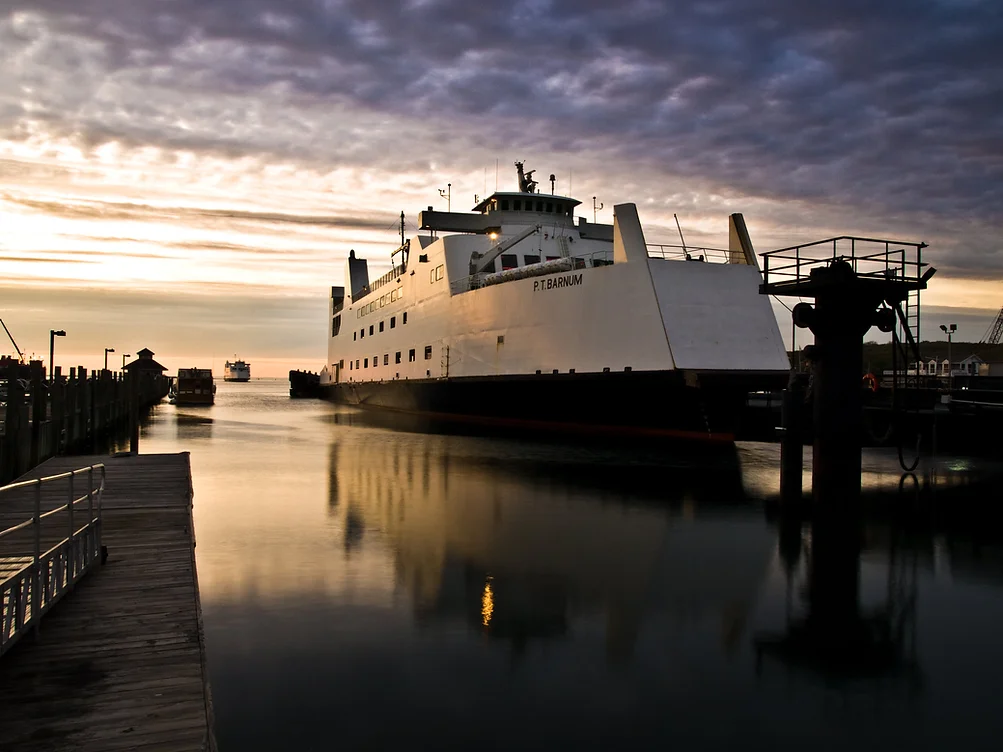
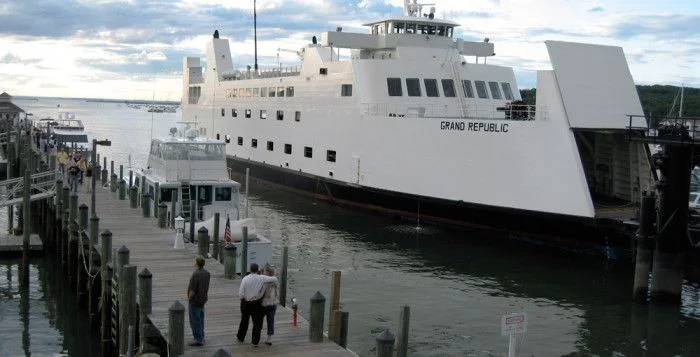
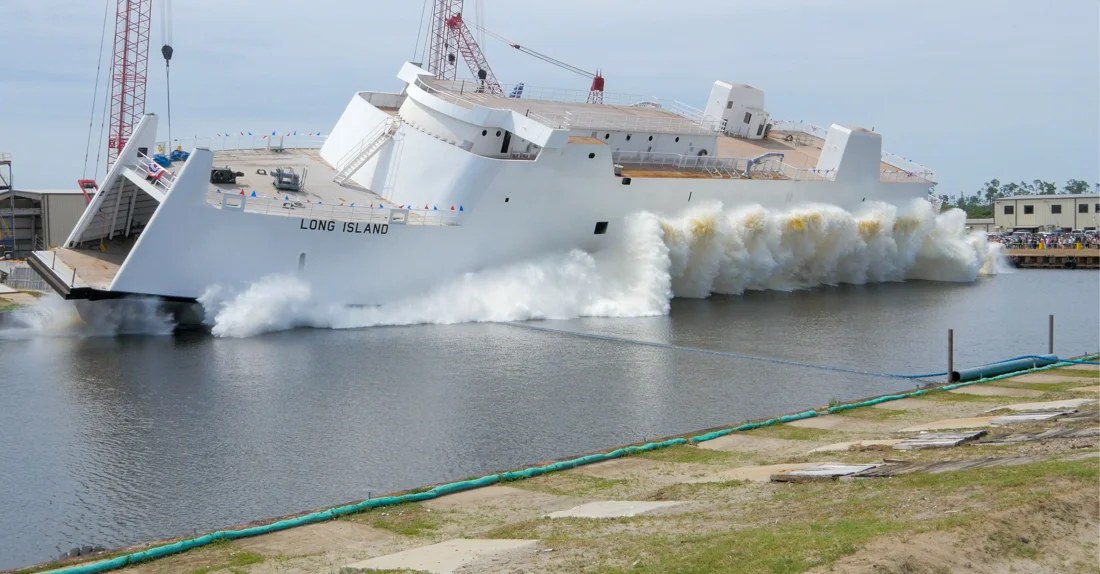
When Gilbert Associates designed a series of three 300-foot RoPax ferries for the Bridgeport & Port Jefferson Steamboat Company, speed was only one measure of success.
The vessels needed to transport passengers and vehicles quickly across Long Island Sound, with service speeds of 17 knots and “catch-up ” speeds approaching 20 knots. But they also needed to be practical to build.
Rather than creating a hull that relied on complex fabrication techniques, Gilbert’s naval architects developed a hull form that delivered exceptional performance while remaining remarkably efficient to construct. Even the bulbous bow, often one of the most challenging parts of a vessel to fabricate, was designed to simplify production without meaningfully compromising performance.
Those goals weren’t treated as separate engineering challenges.
They shaped the hull together.
That’s how commercial hull design works. Every decision influences another, and the best designs are the ones that successfully balance them all.
Every Constraint Shapes the Final Hull
Some of the biggest influences on hull design aren’t hydrodynamic at all.
They’re practical.
Before a single line is finalized, naval architects may already know the vessel has to fit within existing ferry terminals, pass beneath a specific bridge, operate in shallow channels, carry a certain number of vehicles, comply with Coast Guard regulations, or use engines the owner has already purchased.
Those aren’t obstacles to the design process.
They are the design process.
Every constraint removes some possibilities while opening others. Sometimes, that means creating a fuller hull because draft is limited. Other times, it means refining the bow to reduce resistance, adjusting the stern to improve propeller performance, or modifying the overall arrangement to accommodate future operational needs.
The finished hull is the result of hundreds of engineering decisions working together toward one objective.
Different Jobs Demand Different Hull Designs
One of the easiest ways to understand hull design is to compare vessels that perform completely different work.
Passenger ferries are often designed around the infrastructure they’ll use every day. Terminal layouts influence the shape of the loading deck, while vehicle capacity helps determine the overall size of the vessel. Operators also need enough speed to maintain reliable schedules.
River towboats have an entirely different mission.
They operate at relatively slow speeds, so reducing resistance isn’t the highest priority. Instead, their hulls are fuller and blockier, with carefully designed propeller tunnels and specialized rudder systems that maximize maneuverability and pushing power while operating in shallow waterways.
Offshore vessels introduce another set of requirements.
Along with efficiency, they consider seakeeping, structural fatigue caused by repeated wave impacts, and the working conditions crews will experience throughout long deployments.
Those priorities produce a hull that’s optimized for offshore service, just as a ferry or towboat is optimized for its own unique role.
Good Hull Design Is Equal Parts Science and Experience
Modern design software has accelerated the rate at which naval architects can draft revisions and perform calculations.
As hull forms are refined, important performance characteristics can be evaluated almost immediately, making it practical to compare more design alternatives and gradually improve the vessel through repeated iterations.
While technology has dramatically improved this process, it hasn’t replaced experience.
The most valuable design tool isn’t found on a computer screen.
It’s the experience gained from years of designing vessels, solving problems in shipyards, working alongside operators, and watching those designs prove themselves in service.
Engineering calculations matter, but so does understanding how a captain uses the boat on a windy day, how maintenance crews access equipment during drydock, or how changing regulations may affect the vessel twenty years from now.
Those lessons don’t come from a computer.
Hull Design Doesn’t End When Construction Begins
A successful hull isn’t judged on launch day.
It’s judged years later.
Has the vessel remained efficient?
Has it been economical to maintain?
Has it adapted to changing regulations and operating requirements?
Can it still earn revenue reliably?
Those questions influence the design from the very beginning.
Sometimes that means including additional structure because a vessel regularly experiences minor groundings. Sometimes it means accounting for heavier passenger vehicles that may become common years into the vessel’s service life. Other times it means leaving room for equipment or technologies that haven’t yet been installed.
Hull design is as much about anticipating the future as it is solving today’s engineering challenges.
The Best Hull Is the One That Does Its Job
The best boat hull designs aren’t the ones that follow a trend. They’re the ones that solve the right engineering problem.
That’s why every project at Gilbert Associates begins with understanding the owner’s goals, the vessel’s operating environment, and the constraints that define the project. From there, every decision, from hull form and structural design to propulsion and maintainability, works toward the same outcome.
A vessel that performs safely.
Efficiently.
Reliably.
Not just on its first voyage, but throughout decades of service.
Because in commercial marine operations, the best hull isn’t necessarily the fastest, the most advanced, or the most visually striking.
It’s the one that quietly helps the vessel accomplish its mission every single day.
Good hull design begins with a conversation. Contact Gilbert Associates today and let’s build the right solution for your operation.