Flanking Rudders: Why Towboats Rely on Them for Real Control
For towboats, inland river navigation can mean tight maneuvering in shallow or narrow waterways, fighting strong currents, and plenty of twists and turns. Add to these challenging conditions the burden of pushing barges, and it quickly becomes apparent that operating a river towboat requires more than a powerful engine – it takes smart engineering.
That’s where flanking rudders come in.
In this post, we’ll break down what flanking rudders are, how they work, and why they’re a must-have for towboats navigating inland rivers. We’ll also get into design, operational benefits, maintenance, and what to expect if you’re thinking about adding them to your vessel.
How Do Flanking Rudders Work?
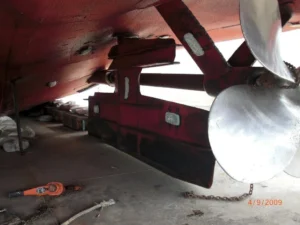
Put simply, flanking rudders are extra rudders placed in front of the propeller in conjunction with the steering rudders behind the propeller.
Why does this matter? Because having rudders both ahead and astern of the propeller means you get more rudder surface area in the flow of water generated by the propeller. This gives the captain way more control – especially when moving slowly or in reverse.
When the boat’s backing up, the rudders ahead of the propeller catch the flow of water coming off the blades and help steer the vessel. This setup lets the boat “walk sideways” in tight spots.
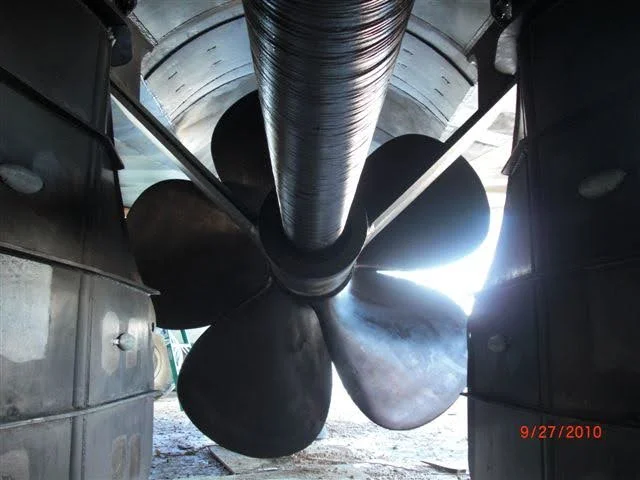
Flanking rudders operate in what’s called the propeller slipstream – the powerful stream of water pushed by the propeller blades. By sitting in this flow both ahead and behind, the rudders can direct that water more effectively, making steering responsive and precise. The propeller tunnel’s geometry is also critical to the effective thrust produced by the rudders.
Why Do Towboats Use Flanking Rudders?
Towboats are a different type of workboat altogether. They must navigate narrow river channels and make sharp turns while pushing 30 barges or more, such that the total tow can be several hundred feet long. Flanking rudders boost the control operators have, giving the boat better grip on the water flow, so they can handle winding, shallow rivers with relative ease. They rely on the propeller tunnel’s shape, working in tandem with the large area of the rudders, to supply the water needed for maneuvering in these shallow conditions.
Not every towboat has flanking rudders, but the ones that do enjoy greater responsiveness, especially when turning, reversing, or holding position. To make a turn, for example, an operator can use a combination of skillful steering and strategic throttling to slowly move the towboat away from shore into deeper water, and then proceed forward, essentially following a series of straight lines to complete the turn. Many operators refer to these maneuvers as “towboat drifting”. The flanking rudders, current, wind, and throttle are all put into play to safely maneuver around bends.
Design: Simple, Tough, Effective
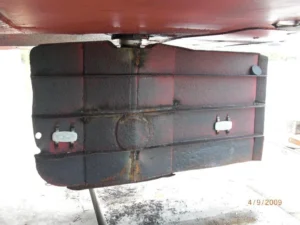
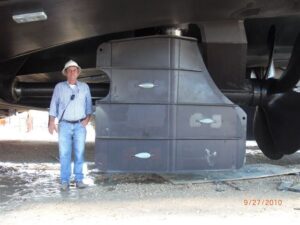
Flanking rudders aren’t fancy. You’ll find flat plate or double-plate rudders built tough because they take a beating – banging against river debris and sometimes the riverbed itself. Configurations vary; some towboats have three rudders, others four – whatever fits the hull and maximizes control.
What Are the Operational Benefits of Flanking Rudders?
- Sharper Turning: Flanking rudders shrink the turning radius and let the boat move sideways when needed.
- Better Backing Control: Backing a heavy towboat into tight spots is tricky. Flanking rudders give you the ability to steer effectively in reverse, simplifying the process.
- Station-Keeping: Holding your position in a current or busy port is easier and more reliable.
- Possible Fuel Savings: Better maneuverability means less power needed, and potentially smaller engines.
The downside? More rudders add drag and require more upkeep. But if your operation demands tight control, it’s a trade worth making.
Maintenance You Can Count On
Flanking rudders need the usual care – regular inspections, zinc replacements, and monitoring for wear and tear. They have twice the hardware compared to a single rudder, meaning twice the maintenance. But it’s nothing out of the ordinary if you’re used to vessel upkeep.
Key maintenance includes:
- Regular inspections of rudders and steering gear.
- Replacing zinc anodes (those small metal pieces that redirect electrical current and prevent corrosion) on the rudders and hull.
- Monitoring wear and tear, especially since flanking rudders get banged up a lot.
With good care, flanking rudders stay tough and reliable—even in the demanding conditions of inland river work.
Conclusion
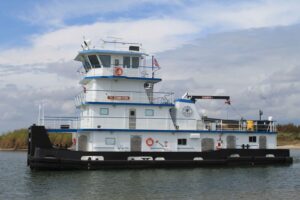
Flanking rudders are standard for inland river towboats, and demand stays steady. At Gilbert Associates, we’ve seen these systems work well on vessels like the John Cox and Brent Ice, delivering the control operators need in challenging river conditions. When your operation depends on tight maneuvers in tricky waterways, flanking rudders are essential.
If you want to explore whether flanking rudders are right for your towboats – or need custom designs or retrofits to an existing river towboat – talk to Gilbert Associates. We build solutions that work in the real world, making sure your vessel handles the most challenging river conditions with ease.